Why portfolio format matters more than ever
Architects, designers, and AEC professionals don’t lose opportunities because they lack skills.
They lose them because their work is hard to evaluate quickly.
Today, employers, HR teams, studios, and even municipalities review dozens — sometimes hundreds — of applications. Their first challenge isn’t judging quality. It’s sorting efficiently.
That’s why the format of your portfolio matters just as much as its content.
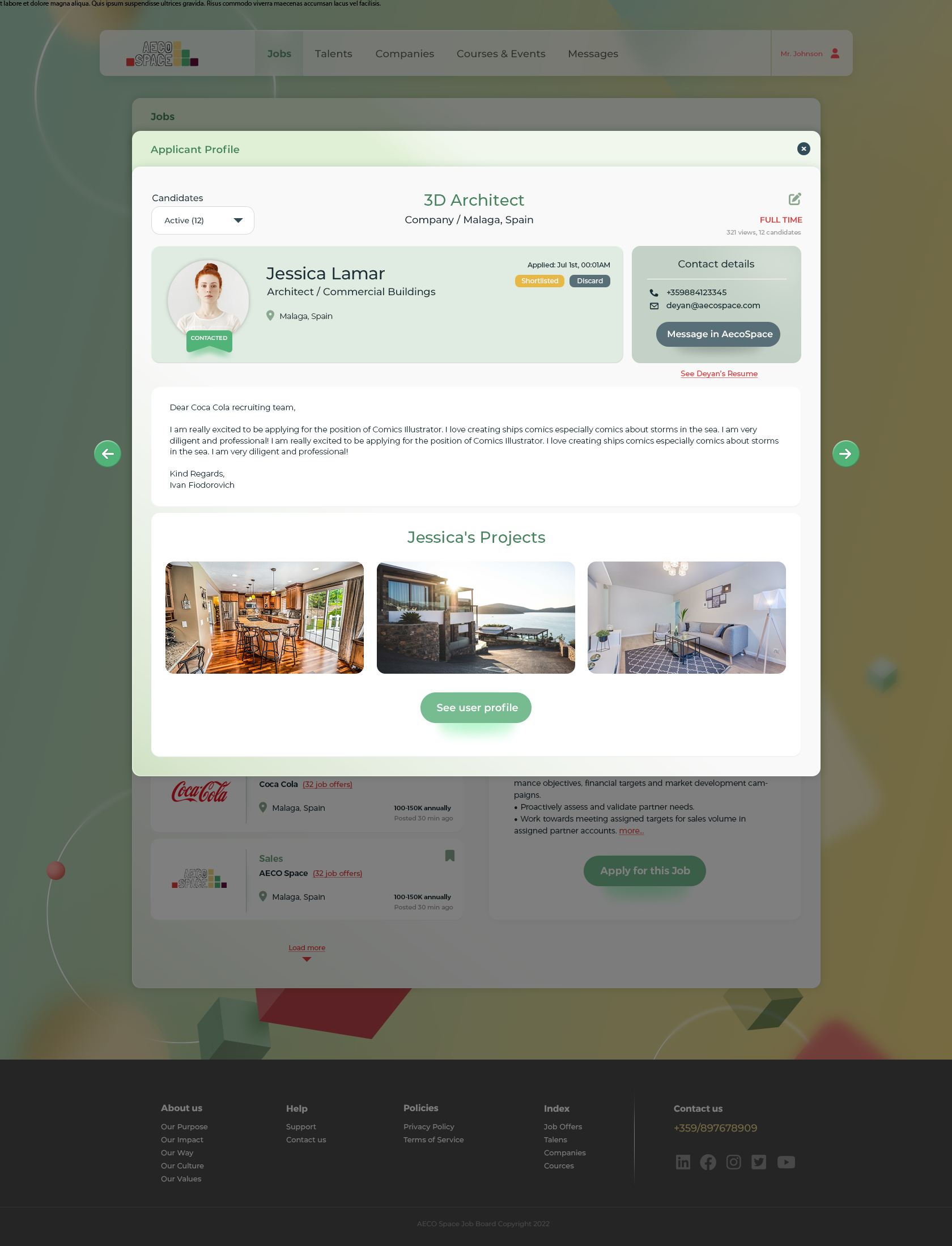
Portfolio presentation is only one part of long-term career visibility in AEC.
👉 See the complete Architect’s Career Blueprint
Who is actually reviewing your portfolio
Portfolios are no longer reviewed only by architects or designers.
Depending on the context, your work may be seen by:
- HR departments
- Architectural and construction studios
- Furniture manufacturers and subcontractors
- Investors
- Municipalities (public tenders)
- Software and hardware vendors
They review portfolios when:
- hiring interns, freelancers, or full-time employees
- searching for subcontractors or partners
- evaluating candidates for public or private projects
This diversity of reviewers directly affects how your portfolio should be presented.
What employers look for first (before they open anything)
Before anyone studies your projects in depth, they look for signals that help them decide whether you are worth opening.
The most important factors are:
- Visual structure – how clearly information is presented
- Speed – how fast they can understand who you are and what you do
- Specific criteria – profession, skills, location, availability, salary range
- Availability – whether you are marked as “Available for work”
Employers don’t want to search.
They want to filter, scan, and decide quickly.
The strengths of a PDF portfolio
PDF portfolios are still useful — in the right context.
Their main advantages:
- Application flexibility – you can upload different documents for different situations
- Controlled formatting – layout, typography, and visual flow stay exactly as designed
- Professional polish – a well-designed PDF can elevate first impressions
PDF files are commonly used to:
- submit a CV only
- submit a CV + portfolio
- attach a motivational letter
For direct applications, PDFs still play an important role.
The limitations of a PDF portfolio
However, PDFs come with clear constraints:
- Static format – information can’t be filtered or searched
- File size limits – typically capped (e.g. 5MB)
- No discoverability – employers must already have the file
- Slower evaluation – requires opening, scrolling, and interpreting
A PDF works after you are selected.
It rarely helps you get discovered.
The strengths of a digital portfolio
Digital portfolios change how professionals are found and evaluated.
Key advantages:
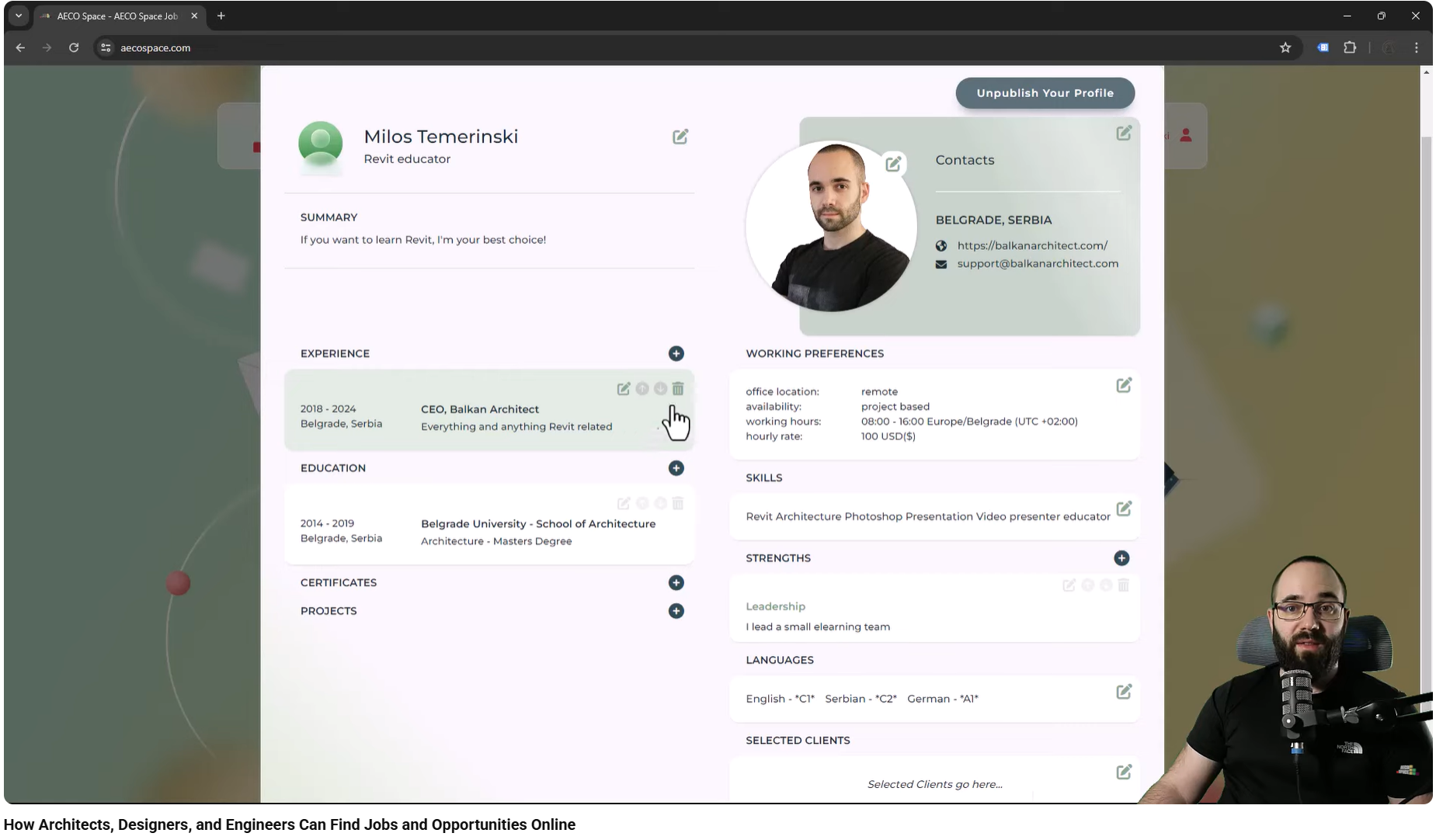
- Discoverability – profiles can be found through search and filters
- Searchability – employers filter by skills, location, experience, availability
- Speed – brief profiles allow quick scanning before deeper review
- Visual clarity – structured fields for projects prevent information overload
- Direct communication – contact details and messaging are built in
A digital profile functions as a mini website, accessible anytime, anywhere.
👉 See how to build a clear and searchable digital portfolio in practice
How employers actually use digital profiles
Hiring managers don’t browse randomly.
A common workflow looks like this:
- filter by a specific skill (e.g. Revit)
- filter by experience level
- save the search
- review only matching profiles
This allows employers to instantly narrow hundreds of profiles down to a relevant shortlist — without opening a single PDF.
When PDF vs digital really matters
The decision is not either/or.
It depends on:
- how often an employer recruits
- how many applications they receive
- how quickly they need to decide
- whether the role is permanent, freelance, or project-based
In practice:
- Digital portfolios help you get found
- PDF portfolios help you apply professionally
The most effective approach: hybrid, not exclusive
The strongest strategy today is simple:
- Maintain a complete digital profile for discovery and filtering
- Attach a well-designed PDF when applying directly
This way:
- employers can find you easily
- decision-makers can dive deeper when needed
- your application remains flexible across contexts
What employers expect to see, regardless of format
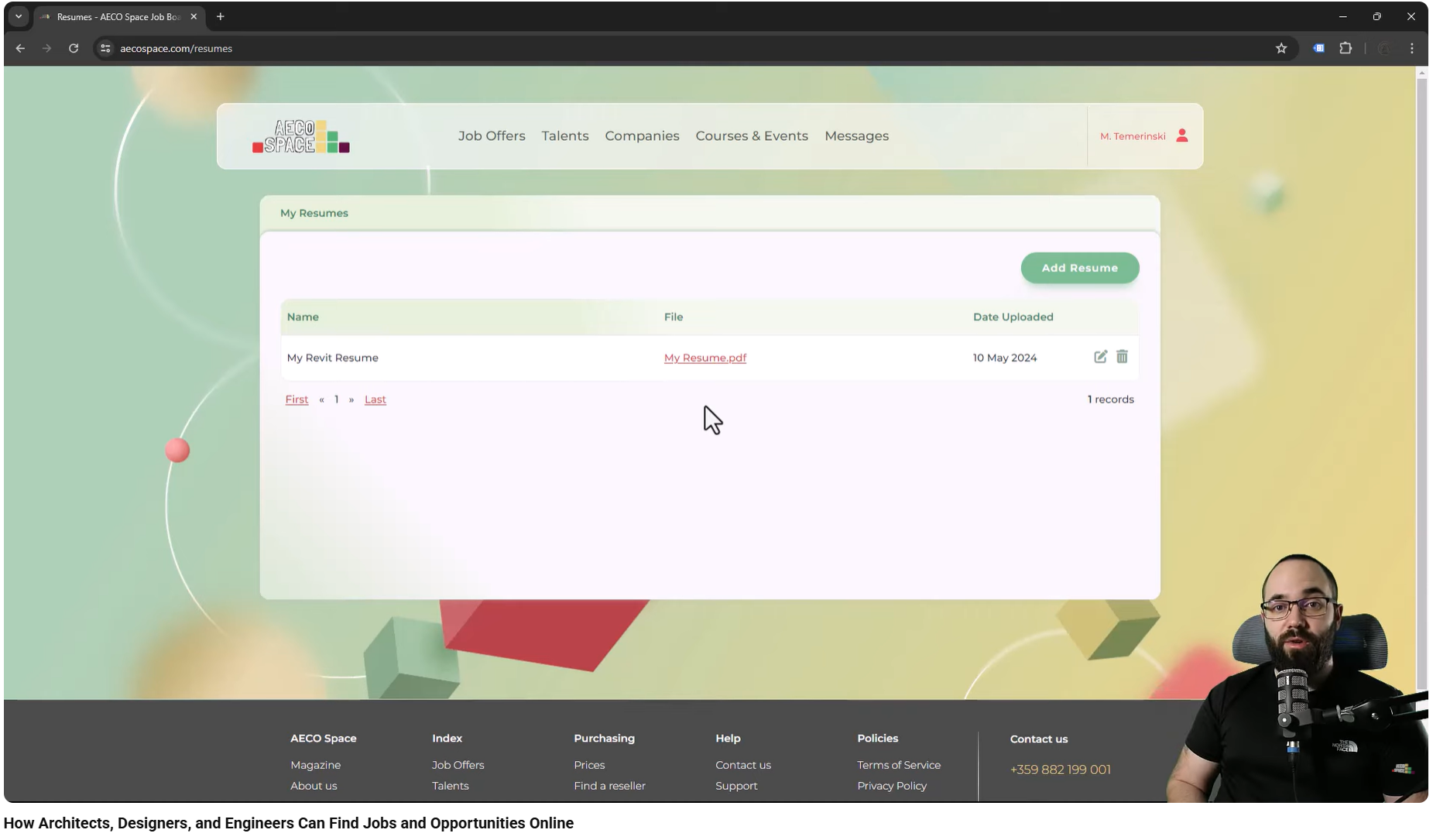
No matter the medium, employers look for:
- clear project visuals
- defined skills (treated as keywords)
- a concise summary of value
- availability status
- relevant experience
Images matter.
Structure matters.
Clarity matters.
What you should do next
- Make sure your digital presence is searchable
- Treat skills as keywords employers filter by
- Use a PDF to support, not replace, your online portfolio
- Design for speed of understanding, not perfection
Your portfolio is no longer just a showcase.
It is a filtering tool.
👉 See how to build a clear and searchable digital portfolio in practice